
Cargo Handling in Kuwait
General freight, perishables, and dangerous goods moved through the bonded warehouse at Kuwait International Airport.
What we handle
The cargo desk at Kuwait International Airport handles every line of freight an airline moves through KWI — general cargo, perishables, live animals, valuables, and dangerous goods. Documentation, manifest reconciliation, and ULD build-up map to IATA AHM and DG regulations; customs clearance is coordinated against the scheduled time of arrival rather than the queue. One team owns the shipment from the ramp to the release note, with audit trail available on every load.
- General freight, perishables, and DG acceptance
- IATA ULD build-up to airline specification
- Customs clearance coordination with KGAC
- Bonded warehouse storage at KWI
- Manifest reconciliation against airline system
- Live-animal and valuable cargo handling
Our Process
How a shipment moves
Pre-alert
Airline sends the manifest; the desk cross-checks against permits, DG documentation, and slot times before the aircraft leaves origin.
Acceptance
Freight is weighed, inspected, and segregated in the bonded warehouse; DG checks against IATA tables are logged before build-up.
Build-up
ULDs are built to the airline’s specification; tie-down, DG separation, and centre-of-gravity constraints verified by a trained loadmaster.
Delivery
Load sheet signed off, ULDs dispatched to the aircraft on schedule; release note and audit trail issued to the airline.
Why airlines pick this desk
One-desk routing
Acceptance, customs, and DG compliance handled by the same team, not three vendors. One phone number per shipment.
IATA-audited process
AHM and DG workflows documented; audit trail available on request for airline safety and compliance teams.
KWI bonded warehouse
On-airport storage for perishables, valuables, and transit cargo; no off-airport truck leg between arrival and acceptance.
Ready to Elevate Your Ground Handling in Kuwait?
Contact our team today to discuss your airline’s specific requirements. We handle every detail so you can focus on operations.
Frequently Asked Questions
Do you accept dangerous goods cargo?
Yes. The cargo desk is staffed by DG-certified acceptance agents working against the current IATA Dangerous Goods Regulations. We handle Class 1 through Class 9 shipments subject to airline authorisation and state variations. Every DG consignment is checked against shipper’s declaration, packaging, marking, labelling, and quantity limits before acceptance. Non-compliant consignments are quarantined and the shipper is notified. Audit trail is retained for the regulatory period required by the operator’s civil aviation authority.
What is the maximum ULD size you can build?
The warehouse is equipped to build LD-1, LD-3, LD-6, LD-8, LD-11, PMC, and PAG ULDs to airline specification. For freighter operations, full-contour main-deck PMC and PAG pallets are built on-site. Tie-down and centre-of-gravity compliance is verified against the airline’s weight and balance manual before dispatch. Custom ULD configurations are accepted with prior airline authorisation and a revised load plan.
How do you coordinate customs clearance?
The cargo desk liaises directly with the Kuwait General Administration of Customs office at KWI. For import, we submit the manifest, commercial invoice, and packing list against the airline’s pre-alert and track the clearance through release. For export, documentation is pre-cleared before the aircraft arrives so build-up is not delayed. Agents or freight forwarders retain their own commercial relationship with the shipper; the desk handles the airside and on-airport clearance interface only.
Can you handle perishables and temperature-controlled cargo?
Yes. The bonded warehouse has refrigerated storage zones for pharma, fresh produce, and chilled meat consignments. Cold-chain segregation is maintained from acceptance through build-up. For active and passive temperature-controlled ULDs, handover temperatures are logged at each checkpoint. IATA CEIV Pharma workflows are followed for consignments that require them, and temperature-excursion events are reported to the airline within the timeframes set by the operator.
What documentation do you provide after release?
Every shipment receives a signed load sheet, an acceptance checklist with inspection results, a ULD build-up record, and — for DG consignments — a NOTOC sent to the flight deck. On request, we provide the full audit trail including timestamps for acceptance, build-up, and ramp dispatch. Documentation is retained digitally and can be produced for airline safety audits, insurance claims, or civil aviation authority investigations for the period required by the operator.
Do you handle ad-hoc cargo and charter flights?
Yes. Charter, ferry, and ad-hoc freighter movements are handled on the same workflow as scheduled operators, with slot and permit coordination routed through our landing-permits desk. Short-notice requests are accepted subject to slot availability at KWI. For one-off freighter arrivals, we can build up the outbound load, coordinate customs, and dispatch GSE without the airline needing a prior standing agreement.
Related articles
Service Insights
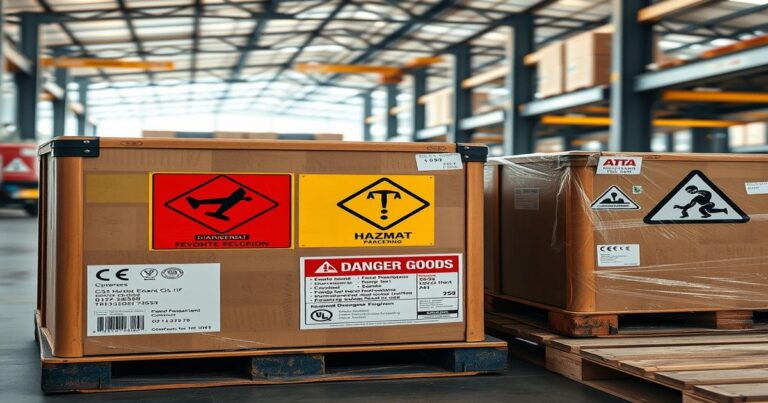
IATA-compliant DG handling at Kuwait International — what cargo operators need to know about acceptance, segregation, and ULD build for hazmat.
Service Insights
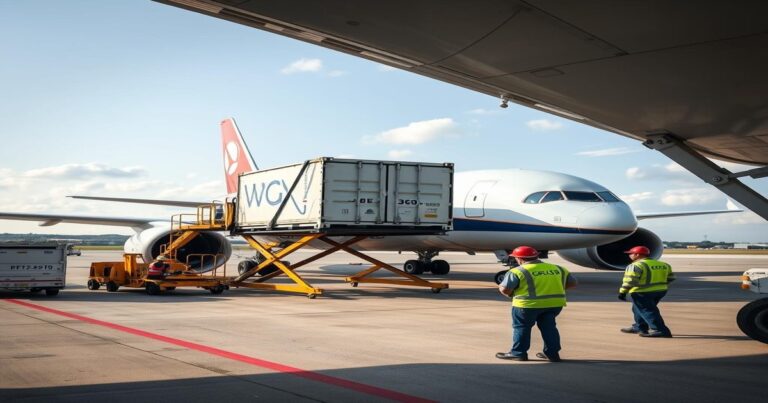
A ramp-side checklist for narrow-body ULD build — pallet selection, weight balancing, locking, and documentation handover at KWI.
You might also need
Ground Support
Pushback, marshalling, ground power, baggage, and GSE for narrow-body, wide-body, and freighter aircraft at Kuwait International Airport.
Landing Permits
Overflight and landing permit coordination with the Directorate General of Civil Aviation Kuwait for scheduled and ad-hoc operators.
In-Flight Services
Cabin cleaning, lavatory servicing, water uplift, and restocking between sectors at Kuwait International Airport.
Partner with Kuwait’s Most Experienced Ground Handler
With over 20 years of operation at Kuwait International Airport, we deliver reliable ground handling for passenger, cargo, and charter operations.